
Brazilian payphones
I found out one or two days ago that ANATEL, the government agency that oversees telecom companies in Brazil, will start removing payphones from the streets. This is a bit heartbreaking because payphones around here have some history attached to them. For starters, they look like this:
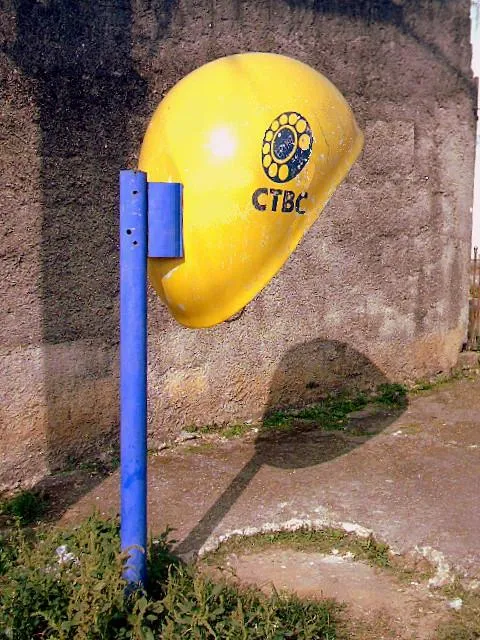
(Source from Wikipedia)

They are called orelhão, literally meaning "large ear", I guess because of how it looks, and are the product of a Chinese-born Brazilian architect called Chu Ming Silveira. The idea here was to avoid having a publicly exposed phone — otherwise the city noise would make it impossible to use — and a closed cabin — which apparently was always misused or vandalized. It also shouldn't take too much space on the sidewalk and should be modular. Believe it or not, this design provided good acoustic protection, despite being open. I used them a lot when I was a kid and had to call my parents when away from home.
The modularity part was important because phone lines in Brazil were very expensive up until the mid-late 90s1, so a payphone was the only way a lot of people had to call someone. And to show how modular they could be, here's a photo with three of them on the same pole:
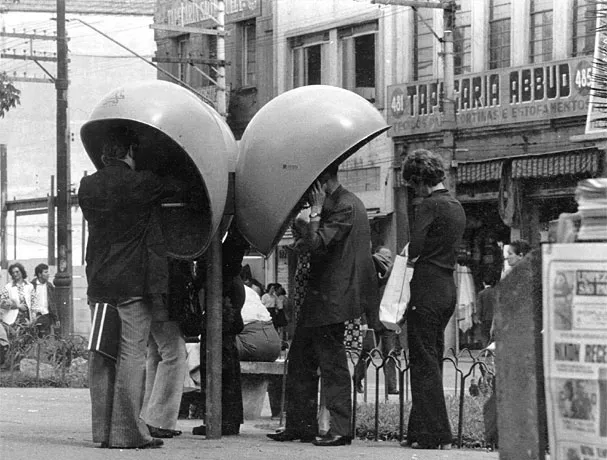
(Source from Wikipedia)

You really couldn't listen to the people using the other payphones unless you really focused and the environment around was silent. It doesn't seem like it, but private conversations weren't an issue.
Anyway, they were a staple in Brazil's urban environments and very iconic, and I was shocked when I found out that other countries don't have something that could be as practical as the orelhão, just the typical out-in-the-open or closed-cabin options — because yeah, all payphones around here were like this.
So, yeah, I'm a bit sad that, in a few years, it will be hard to see them in the wild. They were a good example of "practical design with a nice aesthetic for public use".
They used to be treated as an "investment", and rich people would have multiple lines and rent them for poorer people, just like it happens with housing. Crazy times back then, huh?↩